

How Do Companies Choose the Right Technology Partner? A Guide for CIOs
04.02.2026

Partner Manager
Why Choosing the Right Technology Partner Is Critical Today
CIOs today face a unique challenge: Technological diversity has never been greater, and at the same time, the pressure to deliver faster, more efficiently, and in compliance with regulations is growing. Cloud platforms, modern analytics stacks, AI use cases, and increasing regulatory requirements are clashing with IT landscapes that have evolved over time.
The right technology partner is a good fit for the company not only technically but also organizationally, strategically, and in terms of regulatory compliance. Successful CIOs therefore evaluate partners not primarily based on product features, but on use-case fit, integration capabilities, governance maturity, and implementation expertise
In our analytics and cloud projects, we see time and again that technology decisions fail not so much because of functionality, but because of a lack of alignment with the existing organization and architecture.
In this environment, choosing a technology partner is no longer a purely technical decision. It is a strategic course-setting decision that has long-term implications for costs, innovation capacity, and operational stability. Poor decisions not only lead to budget overruns or project delays but often also to dependencies on individual vendors, which can later be corrected only at great expense.
At the same time, real-world experience shows that success is not determined by technology alone, but rather by the interplay of the platform, the partner ecosystem, and implementation expertise. CIOs therefore need not so much marketing promises as a clear decision-making framework.
The starting point for choosing any technology partner: Clearly define goals and requirements
Before evaluating technologies or partners, CIOs should answer a fundamental question: What specific goal is the company pursuing with this investment?
In practice, these goals can usually be grouped into several categories:
- Cost optimization and efficiency improvements—e.g., replacing expensive legacy systems, improving the utilization of cloud resources, or automating analytics processes.
- Modernization of the data and analytics landscape—such as migrating on-premises systems or analytics environments like SAS to cloud-based target architectures.
- Increased agility and time-to-market—faster delivery of data to business units, self-service analytics, and shorter development cycles.
- Enabling advanced analytics and AI—building scalable platforms for data science, machine learning, and AI-driven use cases.
- Meeting regulatory and organizational requirements: governance, auditability, data sovereignty, and compliance.
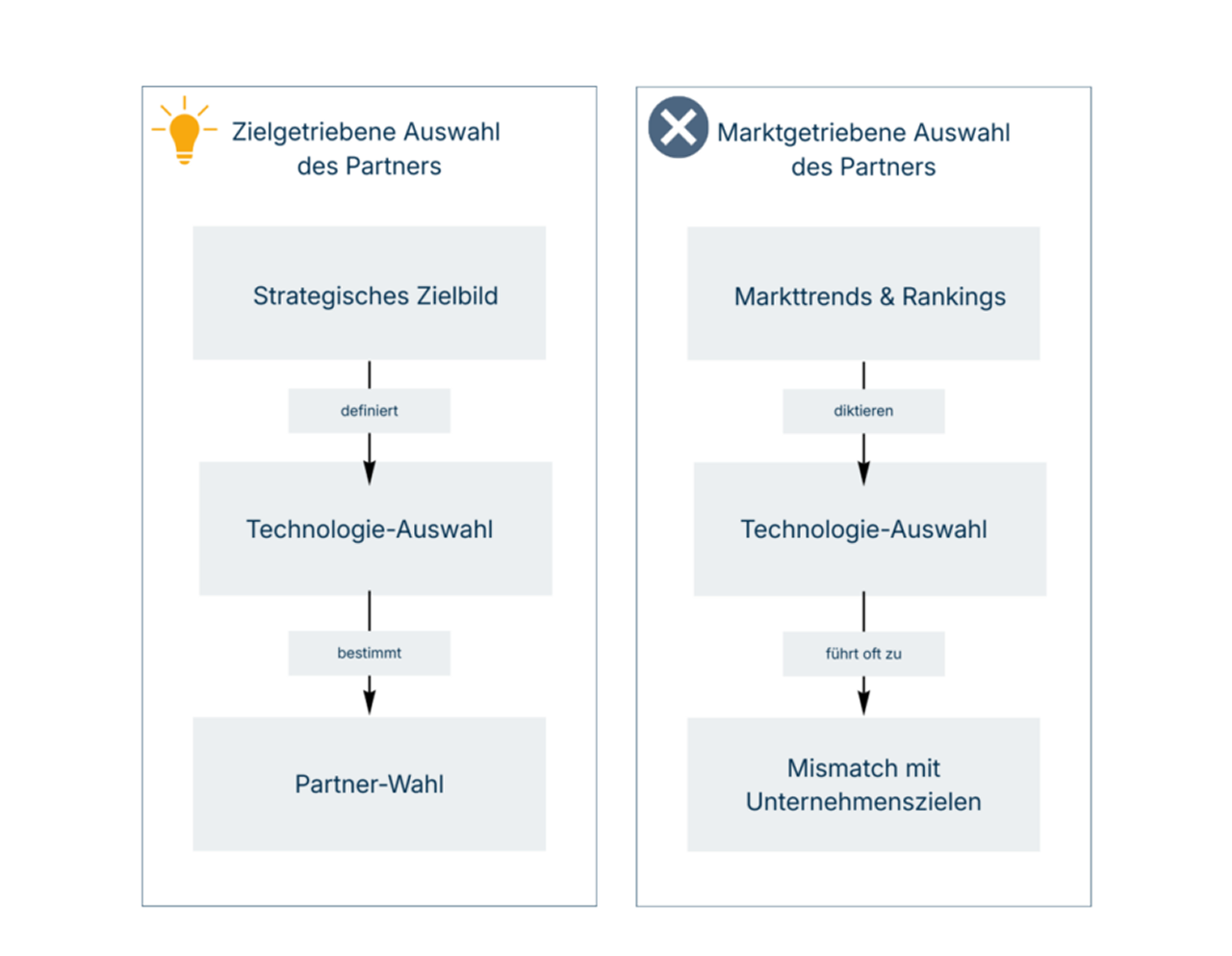
Fig. 1: The 10 Most Important Criteria for CIOs When Selecting Technology Partners
Goal-driven partner selection is guided by the strategic vision. Market-driven decisions based on trends and rankings often lead to poor decisions.
A common mistake in practice is to base technology decisions primarily on market trends or vendor rankings. Successful CIOs reverse this logic: First comes the strategic vision, followed by the selection of technology and partners.
The 10 Most Important Criteria for CIOs When Selecting Technology Partners
Once the strategic goals have been defined, a structured evaluation of potential technology partners follows. In practice, it has become clear that successful decisions are rarely based on individual factors. Rather, it is the overall assessment of technology, ecosystem, and implementation expertise that determines long-term success.
The following ten criteria have proven to be particularly relevant in enterprise environments:
- Technical Capability and Product Maturity
The technology must be stable, scalable, and proven in production. What matters is not only what is technically possible, but what has proven itself in day-to-day operations—even under heavy load and with complex data volumes. - Fit with Specific Use Cases
Not every platform is suitable for every use case. Batch analytics, real-time analytics, BI, advanced analytics, and AI all have very different requirements. Technology selection should therefore be driven by specific use cases. - Integration Capabilities with Existing IT Landscapes
Modern enterprise architectures are heterogeneous. A key success factor is how well a solution can be integrated into existing systems, data sources, interfaces, and tools without creating additional complexity. - Security, Governance, and Compliance Capabilities
For regulated industries, issues such as access control, data classification, auditability, encryption, and data residency are business-critical. These requirements must be natively supported and clearly documented. - Total Cost of Ownership (TCO)
Licensing or usage models are only part of the total cost. Operations, scaling, training, further development, monitoring, and FinOps aspects must be taken into account from the outset to avoid cost risks. Especially with cloud data platforms, it often becomes apparent in practice that licensing models that seem attractive at first become significantly more expensive to operate if scaling, operational overhead, and governance are not properly planned. - Scalability and Future-Proofing
Technology decisions have long-term implications. CIOs should assess whether platforms and providers are undergoing strategic development, have a clear roadmap, and can scale to meet growing demands. - Risk of Vendor Lock-in
Open standards, data and workload portability, and exit scenarios are becoming increasingly important. The more companies rely on proprietary features, the higher the long-term risk that switching platforms later will require significant effort. - Vendor
Maturity and Stability In addition to technological aspects, the vendor’s financial stability plays a key role. Investment security, market position, and long-term availability are particularly crucial for business-critical systems. - Partner and Ecosystem Strength
A strong ecosystem of implementation, integration, and operations partners significantly increases the likelihood of success. It ensures expertise, scalability, and sustainable further development throughout the entire lifecycle. - Implementation and Delivery Expertise
The quality of implementation is often the decisive factor for success. Experience with comparable projects, a methodical approach, and the transparency and neutrality of the implementation partner are at least as important as the technology itself. In practice, it is not the number of goals but their prioritization that determines which technologies and partners are viable in the long term.
These ten criteria help CIOs make technology and partner decisions in a systematic, comparable, and strategically sound manner. They form the basis for a robust shortlist—and prevent decisions from being made solely on the basis of market trends or vendor promises.
In addition, there are, of course, other criteria that can play an important role depending on the company’s context. These include, among other things, contractual terms, commercial flexibility, support and SLA models, regional availability, cultural fit between the organizations involved, or specific requirements of individual departments. These additional aspects are relevant to operational collaboration.
However, they are no substitute for a strategic assessment. In practice, they should only be taken into account once a solid shortlist has been established based on the key criteria. This is because strategic criteria determine whether a partnership is viable. Operational criteria merely influence how the partnership is structured.
Why Modern Companies Rely on Partner Ecosystems
While individual vendors try to cover as many requirements as possible, partner ecosystems aim to combine specialized technologies in a targeted manner.
The days of monolithic IT landscapes are over. Modern data and analytics architectures consist of a multitude of specialized components: cloud infrastructure, data platforms, integration tools, BI tools, data science environments, and operational systems. No single vendor covers all these requirements in equal depth.
In our experience, modern data architectures work particularly well when they are not tailored to a single vendor but are deliberately built as a partner ecosystem. However, this type of architecture requires an integration partner who is equally proficient across multiple platforms—both technically and organizationally.
A best-of-breed approach makes it possible to deploy the appropriate technology for different requirements and to combine them effectively. At the same time, however, technical and organizational complexity increases.
Therefore, what matters is not only which technologies are selected, but also how well they work together and how clearly responsibilities are defined. A strong partner ecosystem ensures:
- greater flexibility in the face of changing requirements
- less dependence on individual vendors
- greater future-proofing through the interchangeability of individual components
A Structured Decision-Making Model for Selecting Technology Partners
A phased approach has proven effective for making technology and partner decisions that are transparent and robust. It creates transparency, reduces risks, and facilitates internal coordination, especially in complex enterprise environments.
Phase 1: Define the Target Vision and Framework
At the outset, the data strategy, target architecture, governance requirements, budget constraints, and time dependencies are clearly defined. This shared vision serves as a frame of reference for all technology and partner decisions as the process progresses.
Phase 2: Create a shortlist of technologies and partners
Based on the defined criteria, suitable platforms and partners are identified. In practice, two to four options have proven effective for ensuring comparability without unnecessarily complicating the decision-making process.
Phase 3: Proof of Value Instead of a Pure Proof of Concept
Pilot projects should pursue concrete, measurable goals—such as costs, performance, time-to-value, or operational complexity. What matters is the real-world added value within the business context, not technical feasibility alone.
Phase 4: Final Partner Selection and Scaling
In addition to technological aspects, the focus here shifts to delivery capabilities, project experience, transparency, and long-term collaboration. The decision should always take the operational and further development phases into account
The Role of a Technology-Agnostic Trusted Advisor
In complex partner ecosystems, one aspect is becoming increasingly important: neutrality. CIOs benefit from partners who are not primarily tied to selling a specific technology, but who focus on the long-term value for the company.
As a technology-agnostic consulting and implementation partner, HMS helps companies make well-informed technology decisions—regardless of whether the optimal path leads through AWS, Microsoft Azure, Snowflake, Databricks, SAS, or other platforms.
The focus is not on recommending individual products, but on the objective evaluation of target architectures, integration scenarios, governance requirements, and long-term operability. Especially for strategic initiatives such as platform modernizations, cloud migrations, or the development of analytics and AI capabilities, this neutral perspective is often crucial for sustainable project success.
Conclusion: Choosing a technology partner is a strategic management decision
Selecting the right technology partner is much more than a procurement process. It is a strategic management decision that has long-term implications for costs, innovation, and operational stability.
CIOs who base their decisions on clearly defined goals, transparent criteria, and a structured approach lay the foundation for sustainable success. Technology, the partner ecosystem, and implementation expertise must always be considered together.
In an increasingly complex IT world, it is not the individual platform that becomes the decisive factor for success, but rather the ability to deploy the right partners at the right time in the right combination.